Showing posts with label pop culture. Show all posts

Monday, August 9, 2010

Love The Way You Lie


Lyrics

I'm so torn by this song and video. I read here that the relationship in this story is mutually abusive, that it goes both ways. But I don't think the video shows that. I see Megan Fox as the victim, even if she does throw a punch or two. She is the one running from him, the one hiding in the bathroom, the one having to forgive, the one deciding to leave the relationship, never the other way around.

I can't stop watching the video, and listening/singing this song. Something about it feels so real and raw, that I'm not too critical of it, even with a line like "I'm a tie her to the bed and set the house on fire". Am I  a bad feminist? Pop culture have too much of a hold on me? The song's lyrics are explicit and detailed, but also ambiguous. Does Eminem really regret his actions, or is he lying to get her back? Maybe both?

Knowing both Eminem's and Rihanna's history of abuser and victim, does that make this song ok? Does the song and video excuse domestic violence? Why did Rihanna choose to sing lyrics that pretty much excuse Chris Brown's actions?

This is what Rihanna said in an interview with Access Hollywood:

"It just was authentic. It was real," Rihanna continued. "It was believable for us to do a record like that, but it was also something that needed to be done and the way he did it was so clever. He pretty much just broke down the cycle of domestic violence and it's something that a lot people don't have a lot of insight on, so this song is a really, really powerful song and it touches a lot of people."

This seems to be empowering to Rihanna. Maybe this is her way to deal with the abuse she experienced. And who are we to judge her? To tell her that "No, you're doing it wrong"? This is her taking her experience, her life, into her own hands and making a statement.


The fact that this song is making me feel all conflicted and bringing up so much emotion from me makes it successful in a way. On the other hand, the way I read and interpret this song/video might be part of the minority. The other day while listening to this song on the radio, after it finished the DJ said something along the lines of, "oh boy, I bet a lot of girls are singing this at the top of their lungs after a few drinks". Is he saying that girls like being in abusive relationships? That they will in the end forgive if they're drunk (there is a lot of alcohol involved in this video)? More victim blaming?

I'm aware that these are all questions and not a lot of answers, but this is all I have right now. Just questions.

One positive thing I can say is that after making this video, Megan Fox donated the money she made from it to a women's shelter, Soujourn House. So it looks like if the song's goal was to raise awareness and help for domestic violence, it is getting there.

Read More:
Bust
Feministing

Friday, March 12, 2010

A Depraved (Yet Not New) Source of Entertainment

The entertainment industry goes to great lengths for our attention and our money. And we all love music, the Great Unifier. But I took a step back and realized that references to rape in our popular culture happen far more often than anyone would like. As a sequel to my previous blog post (I just couldn't hold back), here are more subtle and not-so-subtle, yet casual, references to rape.

There is, of course, the music industry and its contributions to casual pop references to rape. A blogger for the Washington City Paper compiled a list of the top five date rape anthems. At #5, she placed Jamie Foxx's "Blame It On The Alcohol." Yes, the song was played non-stop on the radio for quite some time, but it saddens me that Jamie Foxx would encourage his listeners to take advantage of drunk women. As if an attractive man like him, or any man for that matter, should "do" a drunk girl without a second thought.

This reminded me of a comedic movie released just last year, Observe and Report.

A usually hilarious actor, Seth Rogan, stars in this as a mall security officer who is supposed to be protecting actress Anna Farris' character from a streaker. Case in point: the two go on a date, she gets horribly drunk, stumbles around, throws up, and Rogan's character still proceeds to have sex with her. Some may claim it was consensual; after all, in the brief pause when Rogan asks himself "Is she unconscious?" Farris' character drunkenly complains for him to keep going.

Glad we cleared that up. Total consent on the nearly-passed-out girl's part! But seriously? Rape is a source of comedy now? I wonder how many people paid 10 bucks to see that and felt they had gotten their money's worth...

But back to Date Rape Anthems of our time. A song blogger Amanda Hess chose for her list is by once-popular ska band Sublime's "Date Rape," which documented a girl who wen through the experience, and her struggle and legal battle to punish the rapist. The song would seem not to fit here, but the end of it advocated prison rape, another horrible yet common phenomenon in our society. "Well, I can't take pity on men of his kind...Even though he now takes it in the behind.” Oh, Sublime, you almost had me.

A final moment in date rape song history, and I do mean history, confused me at first. "Baby, It's Cold Outside." Yes, from back in 1944, and it has stuck around until today, a popular Christmas time song, sung by a woman who plans on going home, and a man insisting that she stay. Will Ferrell's character sang it in the adorable movie "Elf," and I doubt countless generations considered the lyrics. I had a look, and realize now that this song is one of the first of its kind to perpetuate the idea that, if a woman says "no" once, just keep plugging away. She'll give in eventually. *nausea*

Have a look:

The neighbors might think—Baby, it’s bad out there
Say, what’s in this drink
—No cabs to be had out there
I wish I knew how
—Your eyes are like starlight now
To break this spell
—I’ll take your hat, your hair looks swell
I ought to say no, no, no, sir
—Mind if I move a little closer
At least I’m gonna say that I tried
—What’s the sense in hurting my pride
I really can’t stay—Baby don’t hold out
Ahh, but it’s cold outside


I'll be looking out my window the next time it snows at night, and I'll wonder "How many women are being convinced, right now, that trying to get home in the snow is a horrible idea and wouldn't they rather have a few more drinks and 'cuddle by the fire'?" Or the heating vent, in most cases...

Unless the snow storm is anything like the blizzard the DC area saw this winter, I want to go back to the days of this picture, when the song first came out, and tell this lovely woman, "His ego is the delicate one, not you! Close up that mink coat and get on home, miss!"

Photo credit: cemetarian at Flickr

Video Game Violence Apparently Needed A Boost...So They Added Rape

I guess video games didn't contain enough violence. So the fantasy world includes doses of degradation of females for those moments when men want to take a break from shooting drug dealers and blowing things up.

I have always thought of Japanese people as well-mannered, cultured and intellectual. And of course, their technological advances are known world-wide as far beyond all the rest. But when I read about one of their contributions to the video gaming world, I was shocked and disappointed.

Shown on the left are a few of the characters the video gamer can choose from in "RapeLay," in which the gamer plays a rapist whose ultimate goal, after stalking and raping a variety of females in many scenarios, is to make a mother and her daughters (shown below) into his sex slaves.

The game that was taken off the developer's site soon after it was introduced in 2006. It never made it to America's stores, but got international attention after it was discovered on Amazon.com last year. I'm wondering what kind of appeal there is here: cartoon females with such sorrow-filled facial expressions. Even the developer couldn't find it in him/herself to make these characters smile.

Next, I considered Grand Theft Auto, a very popular game in the US. I have never been an avid video game player. But an article in Jezebel quoted a blogger who gave me a new perspective:

"Samhita Mukhopadhyay of the blog Feministing, spoke out against the misogynistic imbalance in Grand Theft Auto IV based on a now retracted montage posted on IGN showing Nico killing different women after having sex with them. 'If you could kill male prostitutes in the game, then it would be different, but you can only kill female prostitutes. It's clearly a fantasy. [the video game world] is not the real world, and you have the right to fantasize about what you want to fantasize about. I'm more interested in what informs that fantasy. It's not coming out of nowhere.'"

The Jezebel article discusses that women also play Grand Theft Auto, a game that gives the gamer a world of "moral ambiguity," so the gamer can choose to or choose not to take part in a variety of violent crimes. And killing prostitutes is another choice. The author, a gamer herself, explains, "My fantasies don't involve causing harm to other women, so it isn't something I do in the game."

Aside from prostitute rape, female characters in these games are never the focus. It tends to be murder, theft, and every other form of crime and violence. Yet the women are constantly sprinkled throughout, almost like hyper-sexualized props, to be used for sex at the gamer's discretion. The Escapist's Michael Thomsem sums it up in his article, "Vaginaphobia: Fear of Women in Gaming:" "When sex does appear in games, it is almost always connected to phallocentric displays of male prowess." So any feminist gamers can pretty much forget about a strong, positive female character.

Photo credits: Huffington Post, Techland.com

Thursday, October 1, 2009

Your Weekend Plan? Seeing Whip It!

Dodai has her review of Whip It up at Jezebel and I could not agree with her praise more. My sister and I were lucky enough to catch a sneak preview of the film last Saturday, and our response to it was a resounding "AWESOME."

A coming of age tale about a small town Texas teenager named Bliss who joins a roller derby league. As Dodai so perfectly puts it in her review, Whip It follows the Bechdel Rule, coined by amazing cartoonist and author Alison Bechdel: "One, it had to have at least two women in it. Two, they had to speak to each other about, three, something besides a man." Whip It features not only a strong female lead, played by Juno star (and feminist!) Ellen Page, but an almost entirely strong, non-stereotypical female cast. Bliss's mother, best friend, and teammates are all funny, smart, genuine women. Even the "villain" character comes off looking pretty cool.

Some of the ads have tried to play up the romantic sub-plot of the movie (which is just that--a SUB-plot), but for the most part the marketing has featured positive messages like "Be Your Own Hero" and "Find Your Tribe." It is very obvious that there is a female director (Drew Barrymore) and production team behind this movie.

So yeah, go see Whip It.I am sure it will be a feminist movie night staple for years to come.

Also, the movie totally made me want to join a roller derby league, despite my general fear of athleticism and falling of my face. My sister even gave me a sweet roller derby name: Ruth Hater Ginsburg :)

Thursday, September 10, 2009

Women Who Rock; My Alternative Female Group Database

After reading a post in Jezebel about the first ever all-female Pakistani rock band, Zeb and Haniya, had an urge to write about women who rock.

Zeb and Haniya are from "the Taliban-infested North West Frontier Province," like female rock bands don't have enough adversity to face. These ladies are bringing rock back to India which hasn't happened in ages. Haniya told the Times of India, ‘‘This opposition from the Indian music industry has certainly slowed down the business of Pakistani artistes, but music is something that has no boundaries. And if people like our music we will certainly come back to India.’’

I am inspired by this band because, lets face it, like most other forms of artistic expression, women are under appreciated. This is largely seen in the music world, and in my opinion there is a pretty blatant disregard for female musicians in the public eye.

Female bands are not as few and far between as some may think. To prove this I have spent the past few days compiling a database of female solo artists, songwriters, bands, frontwomen, etc. from my personal music library and friends suggestions. You may notice that most of these groups are not heard on the radio. I listen to alternative, indie-like music, some are obscure and relatively unknown, but others you may listen to yourself. I am narrowing this list down to a specific genre I enjoy, but if this catches on, maybe fellow bloggers could build a list of a genre they enjoy; folk, blues, pop (cough cough Bonnie Carlson, Lizz Mcnamara cough), heavy, ambient, electronic, etc.

This is largely a database for me, just so I can catalogue all my favorite women who rock! But I thought, why not share this with other fellow readers of our Campus Choice blog, maybe you will find something to add to your play list. This is what I have so far:

Imogen Heap/The Sounds (my favorite band)/Flyleaf/Metric/Tegan and Sara/Santogold/M.I.A./Iv in Vein/Goldfrapp/Headlights/Blue Foundation/Bat for Lashes/ Paramore/Kittie/The Donnas/Over the Rhine/The Ting Tings/Shiny Toy Guns/Jenny Owen Youngs/Lily Allen/Ani Defranco/Dirty Martini/Rilo Kiley/Meiko/Tori Amos/Mazzy Star/ Lavender Diamond/Otep/April March/The Gossip/Le Tigre/The Sundays/Sixpense None the Richer/Liz Phair/Regina Spektor...

This is what I have gathered thus far in my search. If you wanna add a group, you can post a comment or email me at zseolivo3@gmail.com :)!

Enjoy!

Glee brings feminist sex positivity to TV

After watching the President's address to Congress last night (more on that to come), I tuned into some slightly lighter fare: the season premiere of Glee.

This was only the second episode ever, but I have to say I am digging this show. I'm a sucker for musicals, and while the show initially appeared to be a High School Musical rip-off when first advertised, it actually has a lot of dark humor and smart dialogue that make it anything but. Also, Jane Lynch, who pretty much pwns anything she ever does. One thing that is making my white privilege radar go off is the character Mercedes Jones, who seems to be stuck in some sassy black girl stereotypes, but I am hoping that they will develop her character and the rest of the supporting cast over the season.

Some slight spoilers ahead, so reader beware.

Last night's episode made me exceptionally happy with its sex positive message. Rachel, the talented outcast leading the glee club, joins the celibacy club in an attempt to win the affections of Finn, her fellow glee member. The activities of the club are played for some cheap laughs (which I enjoyed) until Rachel just can't take it anymore. She addresses the club with a kickass speech (I couldn't get a clip, so go to 21:47 to check it out)


Rachel: Did you know that most studies have demonstrated that celibacy doesn't work in high schools? Our hormones are driving us too crazy to abstain. The second we start telling ourselves that there's no room for compromise we act out. The only way to deal with teen sexuality is to be prepared. That's what contraception is for.

Quinn: Don't you dare mention the "C" word.

Rachel: You want to know a dirty little secret that none of them want you to know? Girls want sex just as much as guys do.

Boy: Is that accurate?

Contraception talk and an acknowledgment of female sexuality? Be still my feminist heart!

Thursday, July 30, 2009

More to Not Love

I, like my colleague Emily, have a somewhat vexed relationship with reality TV. Some days, there's nothing more enjoyable than collapsing on the futon and flipping to Bravo to watch mindless, ridiculous (and often staged) drama unfold.

However, I'd like to think I have my standards. You know, certain lines in the sand that I draw with the crappy-tv-world. When I first heard about FOX's new show, More to Love, I had suspicions that this would, tragically, be one of those series that crosses said line. Unfortunately, my suspicions were realized when I sat down to watch the first episode on Tuesday evening. Check out a trailer/clip below:


For those not familiar, here's the description of this new gem from FOX's website:
MORE TO LOVE, the new dating competition show from Mike Fleiss ("The Bachelor"), follows one regular guy's search for love among a group of real women determined to prove that love comes in all shapes and sizes.
The tragic part is that this sounds like it could be okay. If I put aside my general disdain for dating shows, it seems like this could be a step in the right direction - breaking open the definition of what the public sees as desirable and even "normal." The show's trailers frequently made mention of the fact that the average American woman is a size 14, as opposed to the size 2 stars of most reality TV. But the issue here is that More to Love seems to fall prey to the binary standards of acceptance and tolerance it (hopefully?) sought to debunk. Here's a few examples:

1) Whenever the women are speaking solo (both introducing themselves and commenting on their experience) the caption beneath them states their name, age, occupation, hometown, and - get this - their height and weight. Now, in my experience, the best way to reify a concept of 'normalcy' is to shore up an 'other'. Excuse the dusty women's studies vocab, but I have trouble thinking of any other reason for the women's height and weight to be included other than to make sure that the audience knows that these folks don't fit the social standards of your "normal" bachelorettes.

2) The introductions were the most painful. Primarily because, with a few self-assured exceptions, the women introduced themselves by way of heartwrenching stories of unrequited love, failed relationships, and prom night agonies. All of this, of course, on account of their size.

Okay. As mentioned before, I really don't like dating shows in general - they seem to feature women as a) utterly weak and pathetic or b) extremely cutthroat. Also, these shows equate a relationship with happiness - ignoring the reality of both extraordinarily unhappy relationships and perfectly happy single people.

I'm starting to think, maybe I was giving this genre of TV and FOX itself too much credit here, with the assumption that by producing this show they would be carrying the message that "it's possible to be happy and to be greater than a size 2." Throughout the show, I was disappointed that most of the women spoke about their size and love lives with such disgust and sadness. If we're really trying to increase personal and social acceptance, it makes me cringe to see women giving credence to a flawed, arbitrary concept of normal and in fact blaming their lack of compliance for their misery. Isn't this just another way of underscoring the notion that living within a socially constructed norm equates with happiness, while everything outside of that will mean a life of unfulfilled misery? Awesome.

3) Also, I struggle with the choice of bachelor and emphasis placed upon his also-greater-than-"normal" size. With terrible euphemisms related to the size of both bachelor Luke and the women competing for his attentions, the show describes itself. "This brawny prince is searching for one curvy Cinderella to take on the romantic adventure of a lifetime." (Thank you, FOX, for your clever usage of a thesaurus and deliberate avoidance of the descriptor "fat.")

This gives me qualms. I am totally for increasing size acceptance for both men and women alike, but I'm struggling a little bit with the connotation here. Are viewers to take away the message that the only way a fat woman can be happy is if she's in a relationship with a fat man?

It seems to me that if we did the same for any other physical attribute, it'd be at best, silly, and at worst, extremely offensive. If I suggested a show where only black women competed for the affections of a black man, I'd be thrown to the dogs - and rightly so. What if we restricted the field of bachelors/bachelorettes based on ability? Or ethnicity? Hair color? And is it any better to restrict based on the trait of fatness than it was for the other reality shows to (tacitly) restrict the pool based on thinness?

Like I said, I'm a little torn over this one. Overall, obviously not impressed with More to Love. I'm disappointed because I wanted to believe it would exceed my expectations, and I'm anxious because I worry about the message it sends to viewers and to society. What are your thoughts?

Monday, July 20, 2009

Reality Check

Trashy reality TV has always appealed to me, especially those shows on basic cable. I love "Whose Wedding Is It Anyway?" and regularly bring up "16 and Pregnant" in conversation (much to the amusement of my coworkers). Quality shows like "Mad Men" and "30 Rock" may be my official favorites, but many a Sunday in my house has been rendered unproductive by a "What Not To Wear" marathon.

The guilty pleasure I derive from viewing these shows leaves me conflicted as a feminist. They are voyeuristic, putting others' flaws on display. Part of the fun of watching pregnancies, weddings, and makeovers is passing judgment (who hasn't felt superior after watching an episode of "Clean House" and realizing that her messy room is not that bad?). But who am I to judge these people? And there are a host of other issues involved (weddings are a patriarchal institution and billion-dollar industry, pregnancy shows rarely, if ever, mention abortion as a safe and appropriate choice for women, makeovers hinge upon socially constructed beauty standards, etc). I won't even broach the Jon and Kate fiasco.

Yesterday, however, I stumbled upon a new show that may be the most awful reality tv I've seen--and not in a good way. I had to turn it off two minutes in.


"Most Popular" is a new WeTV show. Seven women stand on stage as 100 women in the audience vote them off one by one. There is no real competition and no talent is measured. It all depends on the instincts of the audience. Whoever is left standing at the end wins up to $10,000 and the title "Most Popular."

This show seems to be the epitome of all that is wrong in our society. These are grown women on display, humiliating themselves for some money or fame (WeTV fame, but whatever works). And those are grown women in the audience, readily offering their opinions on other women's weight, face, or clothing. Their motivation is less clear.

This is woman-on-woman crime. And it needs to stop.

So yeah, maybe I will cut back on my reality tv. I may not be as mean-spirited as these women, I may be rooting for the girls on "16 and Pregnant" to be good mothers, get their GEDs, and kick the dumb boyfriends to the door, but I am still a part of this culture. And I am partially responsible.

Wednesday, July 8, 2009

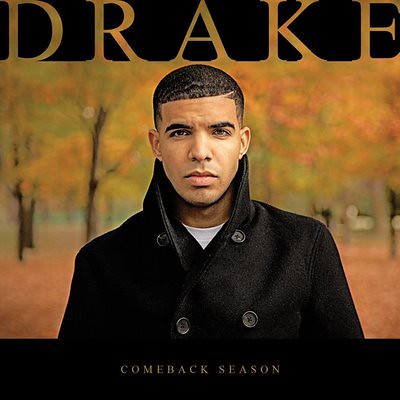
From Degrassi to Drake: Does rap's newest addition respect women?


POP CULTURE UPDATE! With a feminist twist of course...

I don't know how many of you are as entirely infatuated with the Canadian television show called "Degrassi: The Next Generation" but it is one of my favorite soap operas. Degrassi's ridiculous drama always ends with the perfect moral message, a la 7th Heaven, and holds absurdly terrible but endearing acting abilities of sweet Canadian actors making it, obviously, the best thing I have ever seen.

My immensely positive experience with the characters of Degrassi lead me to expect only the best from "Drake", or Aubrey Drake Graham, the newest addition to the American rap scene, who plays the wealthy, attractive, but sensitive Jimmy Brooks on "Degrassi". I will admit my initial interest in Drake's, “Best I Ever Had” was entirely fueled by my realization that he was the star of my favorite show but I was further intrigued by the popular opinion that Drake's public appeal and success was based in his “respect for women".

Since popular rap music usually gives me a throbbing headache as the sexist sound waves hit me in the face, I was excited to see that Drake, aka "Jimmy Brooks", was promoting a female friendly rap song.

But, sadly, I was mistaken.

Drake gave up the good natured “Jimmy Brooks” for the American rap scene. His lyrics are simply more of the same with a chorus that sounds kind of like a compliment with “You the F*cking best”, while the "compliment" hinges on the availability and sexual skills of the woman in question.

Drake follows with praising his female companion for withholding sex ("she make me beg for it till she give it up") but only for a time. Would he like her as much if she never actually "gave it up" or wasn't ready for sex?

Asking women to withhold their own sexual desires, but also always be ready to "give it up" when asked, is a constant double standard perpetuated by countless outlets of media today. Drake is not "respecting" women, he is simply demanding women do what he wants or else they won't be "the F*cking best".

Also, you should check out the video Kanye West invented for Drake which even further emphasizes Drake's opinion on what makes a worth while woman.

The implication that women are only successful as partners or girlfriends if they constantly engage in sexual acts or fantasies is one of the most detrimental aspects of pop culture and music today. Young girls grow up believing their worth as a human being is bound up with how attractive men think they are. This idea penetrates race and class and fall upon all women who are subjected to these lyrics.

Obviously, I am disappointed in Drake. But no matter how hard he tries to be the next Lil' Wayne, Drake will always be Jimmy Brooks to me, the nice Canadian boy from Degrassi High who scolded his friend Spinner for treating their gay friend differently, who forgave the man who caused his paralysis,and was an aspiring rapper while trapped in a wheelchair. Maybe if I hold him to this image Jimmy Brooks can make a reappearance in Drake. Until then I suggest watching Degrassi, especially the first few seasons, and ignore Drake until he lives up to his promise of empowering women.